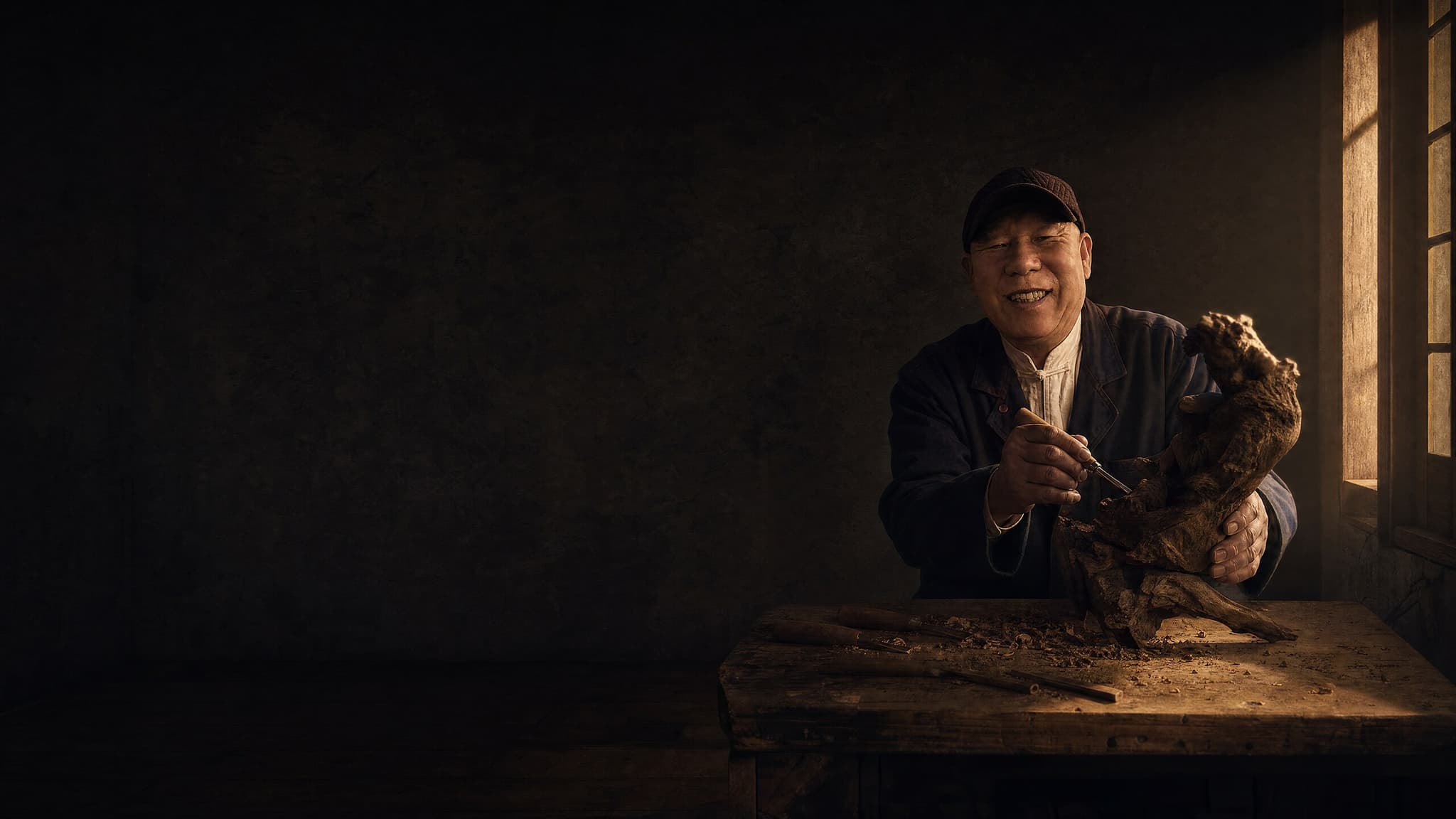
Heo Teho
He does not carve a shape into a root. He finds the root that already has one.

Two materials,one way of working.
A viewing stone is not carved. It is looked for until one is found that already holds a mountain, and then it is raised on a stand so it can be seen properly. Root wood is treated the same way — the cutting only removes what covers the shape.
That is why the two sit together here. They are not two crafts. They are one method showing up in two materials, and the light inside the wood is there for the same reason the stand is under the stone: so that what was found can be read.
Nothing here was designed. It was found — then opened.
Four steps, and most of them are waiting.
- 01
Finding
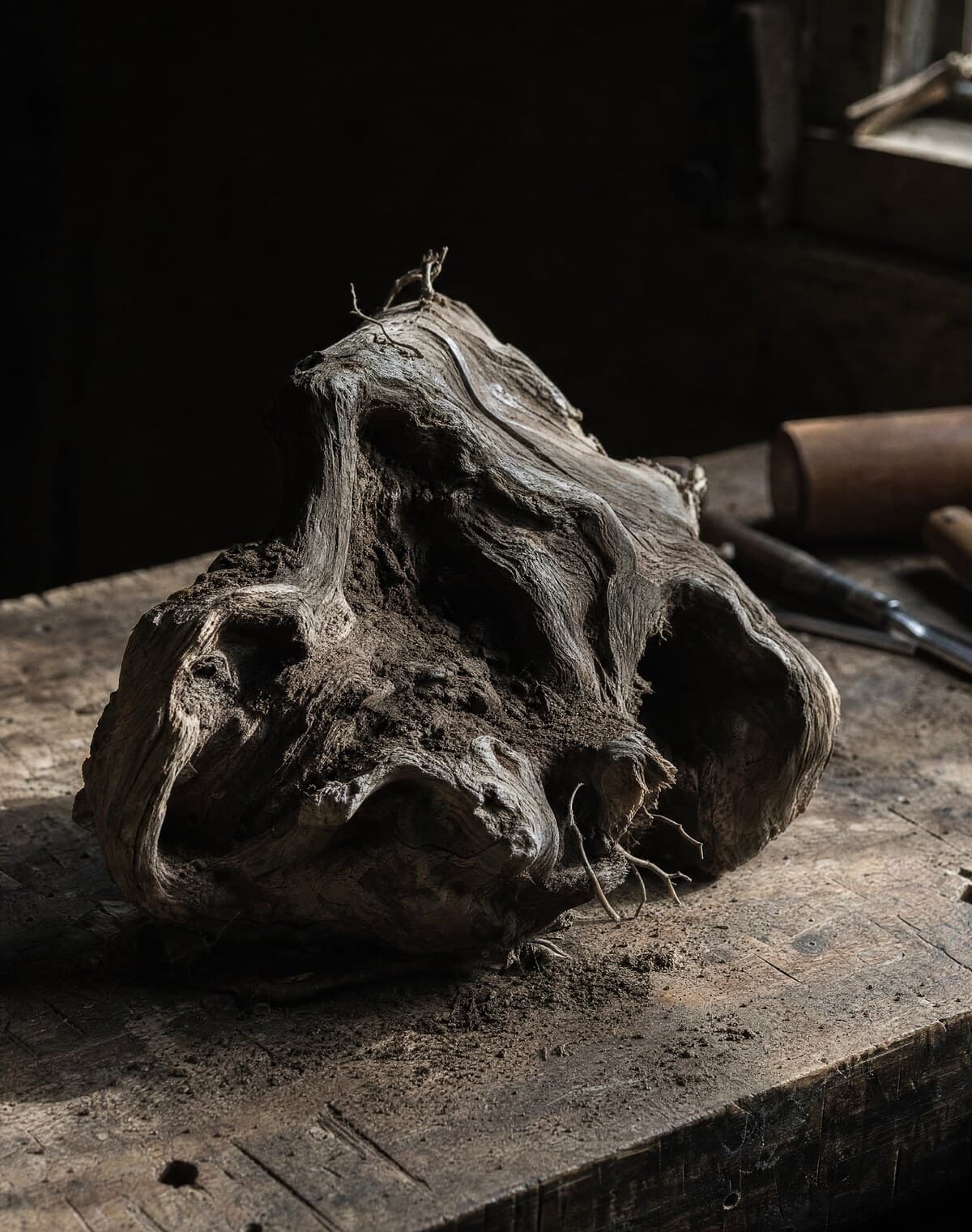
The work starts in a riverbed or a cleared hillside, not at the bench. A root that has outlived its tree keeps the shape the ground pressed into it. Most of what he brings back is never used.
- 02
Waiting
Wet root moves. It is stripped, washed and left to dry for months — sometimes years — before a single cut. A piece that is worked too early will split along the grain later.
- 03
Opening
Cutting is subtraction only: bark, rot, and whatever hides the form that is already there. Where a hollow runs deep enough, a light goes in so the grain can be read from inside.
- 04
Signing
A pyrographed seal on the base. No edition number, because there is no edition — the material only made that shape once.
Ask about a piece, or about the work.
Enquiries go straight to the studio. Write in English or Korean.